
Designing the perfect poster is the aim for any marketer as they incorporate out-of-home advertising into their marketing mix. And JCDecaux supports advertisers to optimise their OOH campaigns no matter what the brand or sector.
It was to this end that JCDecaux’s Senior Strategic Insights Manager, Nick Drewe and Wayfair’s Associate Director, Head of Creative and Promotions in the EU, Mike Pearson, shared their perspectives and research findings in ‘The Data Solution – award-winning measurement meets the perfect poster’ webinar.
It’s why JCDecaux embarked on its ‘How to create the perfect poster’ work with Lumen and System1. By tying creative performance to our database of brand impact studies, we can predict campaign effectiveness using our proprietary creative testing metrics.
The resulting guidelines for the most effective poster design give marketers a blueprint of how to achieve the best OOH creative. From where to place branding to bold colours, from using faces to copy lengths and calls to action – the research has fed into clear and simple actions to improve the effectiveness of OOH campaigns.
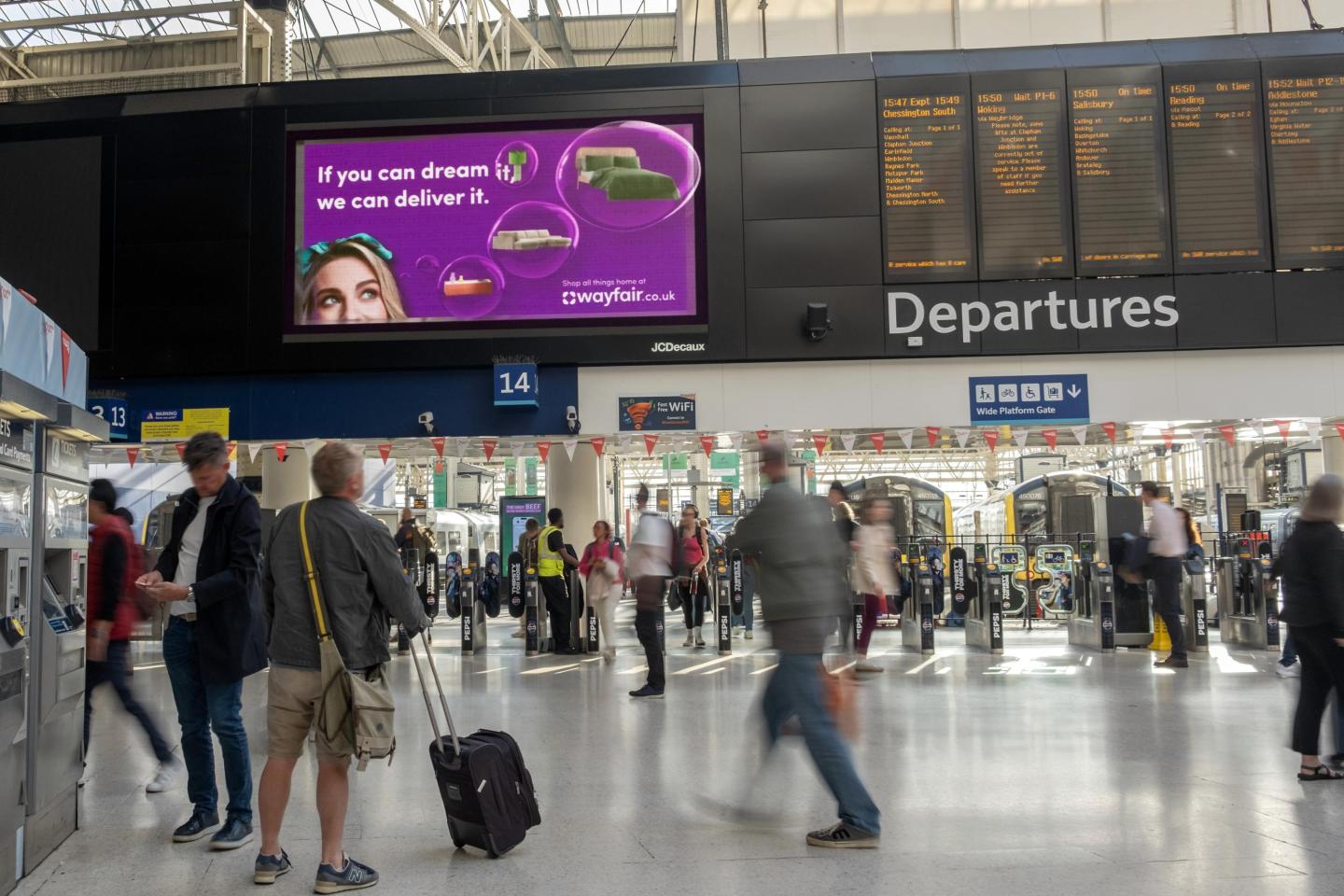 Wayfair's out-of-home campaign at London Waterloo
In each case, data supports these creative tweaks. For instance, when ads revolve around product, expanding product imagery to at least 50% of the creative space can deliver nearly 40% more attention. Similarly, keeping copy tight is vital – creatives with more than seven words are 30% less likely to land the brand.
Using our proprietary creative testing suite, Optix – which combines thousands of hours of historical eye‑tracking, neural data on cognitive effort and trends from creative engagement studies – we can benchmark creative to understand what ‘good’ looks like.
Optix returns scores for attention, dwell and clarity against the database, so we can prove that measurably clear creatives produce better results across the entire marketing funnel. Strong, simple creative delivers on average 7% higher gains in brand awareness, 8% in consideration, 11% in conversion to action and 7% greater improvements in brand perceptions.
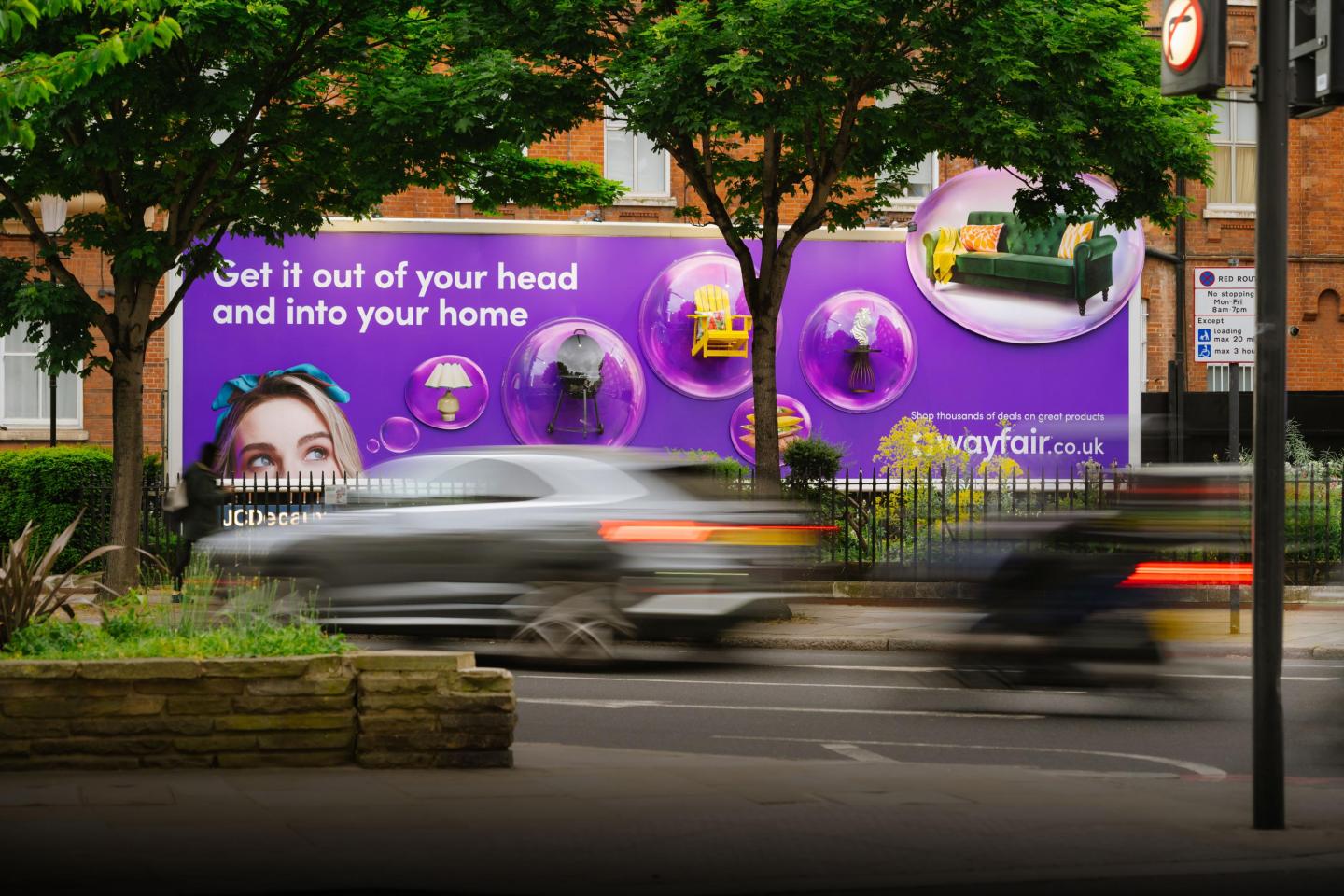 Wayfair's large format, special build out-of-home campaign
Mike Pearson gave specific insight into how applying the perfect poster principles to Wayfair’s advertising had benefited the ecommerce business and built brand trust.
Mike PearsonYou’re not just competing with other ads. You’re competing with everything. So, at Wayfair we focus on an ultra-distilled message and a single memorable promise. That starts at the brief: what is the one key thing you want people to take away?
Associate Director, Head of Creative and Promotions in the EU, Wayfair
Wayfair applied three core focuses: land Wayfair fast; one message, not many; and happiness does the heavy lifting.
The brand treated OOH as a real-world design problem – factoring in distance, speed, clutter, light and distraction. By making small changes such as tweaking headline and logo size and calls to action while the campaign was live, Wayfair achieved significant returns on its investment.
The results speak for themselves. Those exposed to the campaign showed: higher consideration (35% vs. 25%) and higher use (21% vs. 4%). In addition, perceptions of discoverability – “easy to find things I like” moved from 17% to 25% and “reflects my personal style” improved from 21% to 26%.
Out-of-home is the last true broad reach advertising medium, delivering 98% reach. As each impression grabs attention, the creative is vital – and this is where the perfect poster work can make such an impact on campaign success.
For more on attention research: Attention! London Calling research | Attention Measurement | JCDecaux Marketing Hub