
Some summers go down in history and – for many of us – 2026 will forever be the summer of sport. From the FIFA World Cup kicking off in Mexico City and The Championships at the All England Lawn Tennis Club in Wimbledon, to the Commonwealth Games in Glasgow and the England vs Pakistan Test Match across the nation. No matter what your sport, there’s been something to entertain this year.
Beyond the athletic prowess and tension that elite competition on a global stage engenders, something else – equally profound – was noticeable throughout this summer of sport. The delight of shared experiences in the real-world.
Enjoying a World Cup game in a stadium in North America was only ever an option for a select few. But we could all flock to shared spaces – from the pub to friends’ houses, communal screens to large fan zones – for the collective energy and joy of watching alongside fellow fans.
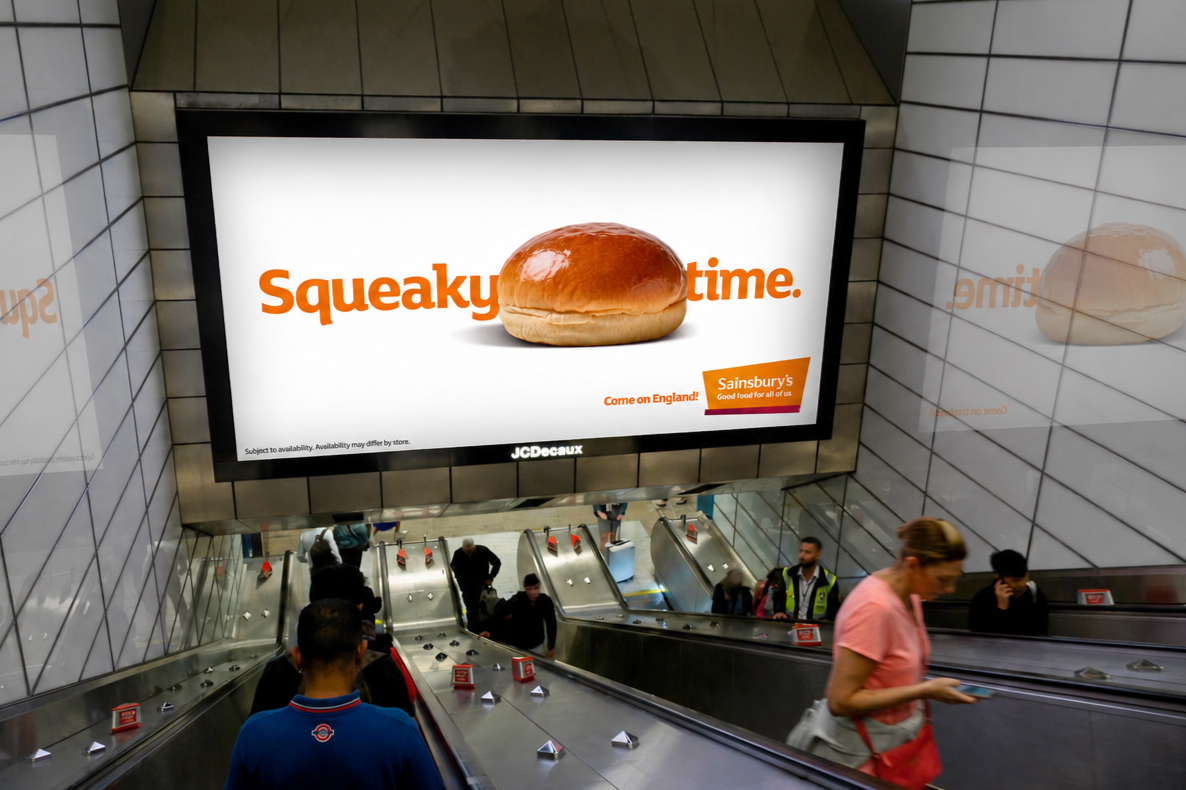 Sainsbury's quarter final World Cup 2026 ad
Some shared sporting experiences are smaller scale, but no less enjoyable. My personal real sporting highlight was seeing my 12-year-old son, Oscar, win Player’s Player of the Year award for his football team. Teamwork, winning, losing – it’s all part of shared real-life sporting experience.
The summer of sport has highlighted how much real-world connections and experiences are desired and needed. And while sport has been the focus this year, the Harry Styles fans filling Wembley stadium for a record-breaking 12-night residency shows how real-world experiences are valued in all forms.
Research backs up what we’ve all witnessed for ourselves the past couple of months. Most adults (81%) report that being outdoors makes them happy and multiple studies have identified how shared experiences strengthen social connections. Being together, in the real world, is good for us.
Recognising the value and unique draw of the real world – and reaching audiences in those places and that mindset – is where out-of-home advertising really comes to the fore. Capturing the attention of people as they enjoy real life, is one of out-of-home advertising’s unique strengths.
For instance, our research with Lumen using eye-tracking tech and surveys to study the attention levels of people driving, walking and waiting at London bus shelters found that screens inside bus shelters deliver more than 25% better attention than Instagram, Facebook and YouTube. In addition, three quarters of people who were exposed twice recalled the brand.
While celebrating all that the real-world environment of Out-of-Home offers brands, we know that people spend significant amounts of time in the digital space. And for brands, the complementary nature of OOH and online is invaluable. Research has shown that 67% of Gen Zs remember seeing an ad online after previously seeing the same ad OOH – showing how online and offline channels work together to create a seamless customer experience.
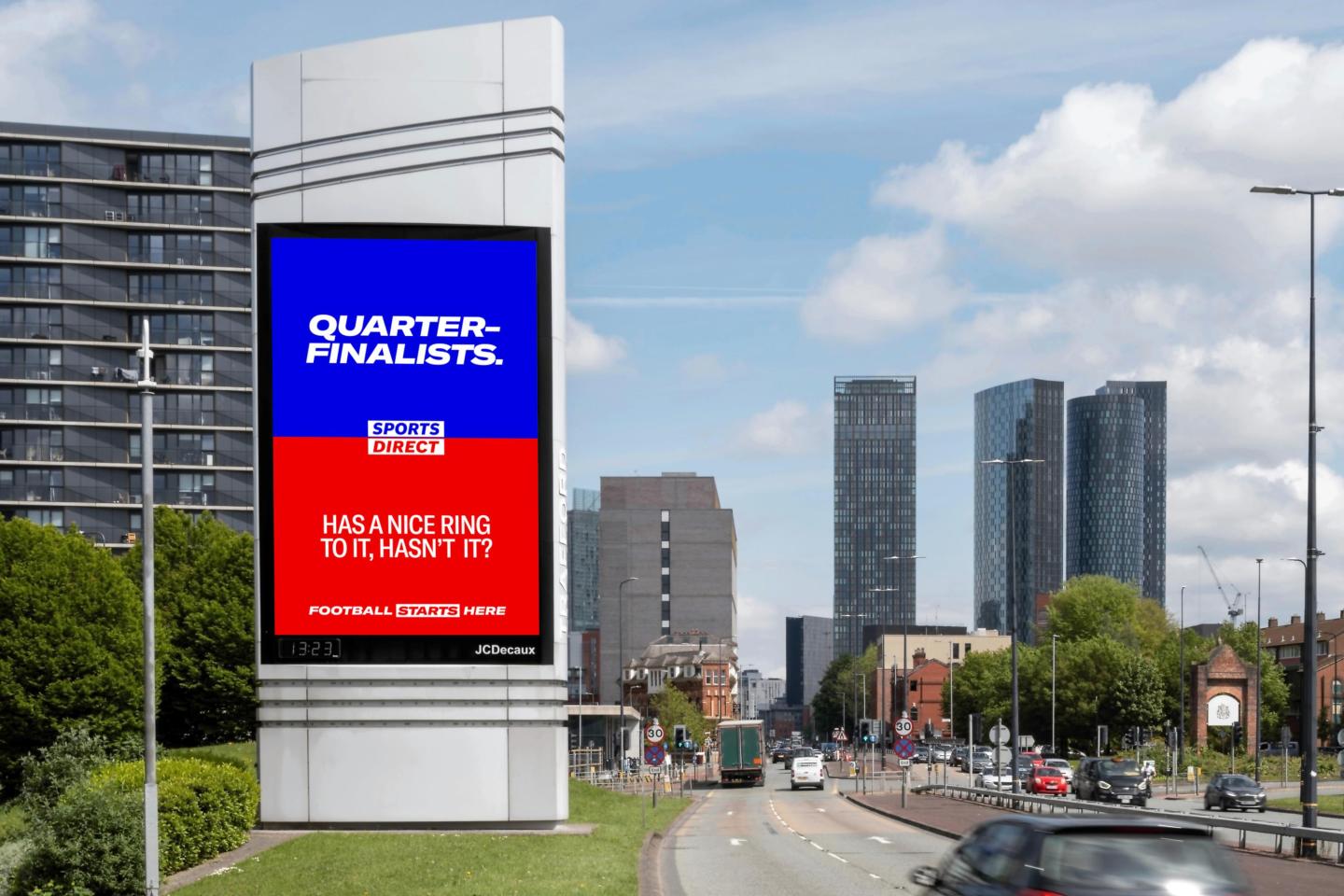 Sports Direct's quarter final World Cup ad on the Trafford Tower
The real world, shared sporting experiences this summer were elevated by the emotions involved. From anticipating a big game, to watching your team win; the highs and lows of sporting competition were keenly felt. The programmatic and responsive capabilities our digital screens offer brands meant that advertisers could directly tap into the emotional journey that the World Cup gave fans.
Results-focused executions were embraced by advertisers including Sports Direct, Walkers, Sainsbury’s and Chase in their creatives throughout the tournament. Always timely, often humorous, supportive and celebratory, the out-of-home advertising seen on our screens throughout the World Cup exemplified the impact this medium offers brands.
The summer of sport undoubtedly entertained us all while showcasing real-world experiences, shared moments and the power of out-of-home advertising. For brands, the message is clear. When you show up in the real world, at the moments that matter, your campaigns don’t just get seen – they become part of people’s memories.