
Seeing people like us in advertising and the media matters. At a human level, it’s about identity and belonging. At a brand level, it’s about trust and relevance. What brands communicate reflects what’s valued in society, it’s a signal of acceptance and represents the world we live in. If we never see ourselves in advertising, the subtle implication is our stories and needs are less important.
Advertising is a powerful and pervasive cultural signifier; that’s why it’s so important that underrepresented groups of people are present. When ads show diverse bodies, ages, lifestyles and more, it reduces ‘otherness’ and increases a sense of belonging.
The real-world media of Out-of-Home advertising has a unique role because it exists in the real world and is experienced collectively. Unlike a social feed curated for an individual, a billboard or screen is seen by everyone, helping shape what society notices and values.
Understanding how people in underrepresented groups feel about the advertising they see in the real world is an important step towards better representation. It’s why JCDecaux Reach – our programme dedicated to helping brands connect with diverse and underrepresented audiences through Out-of-Home advertising – partnered with The Diversity Standards Collective on research identifying the disability gap in advertising.
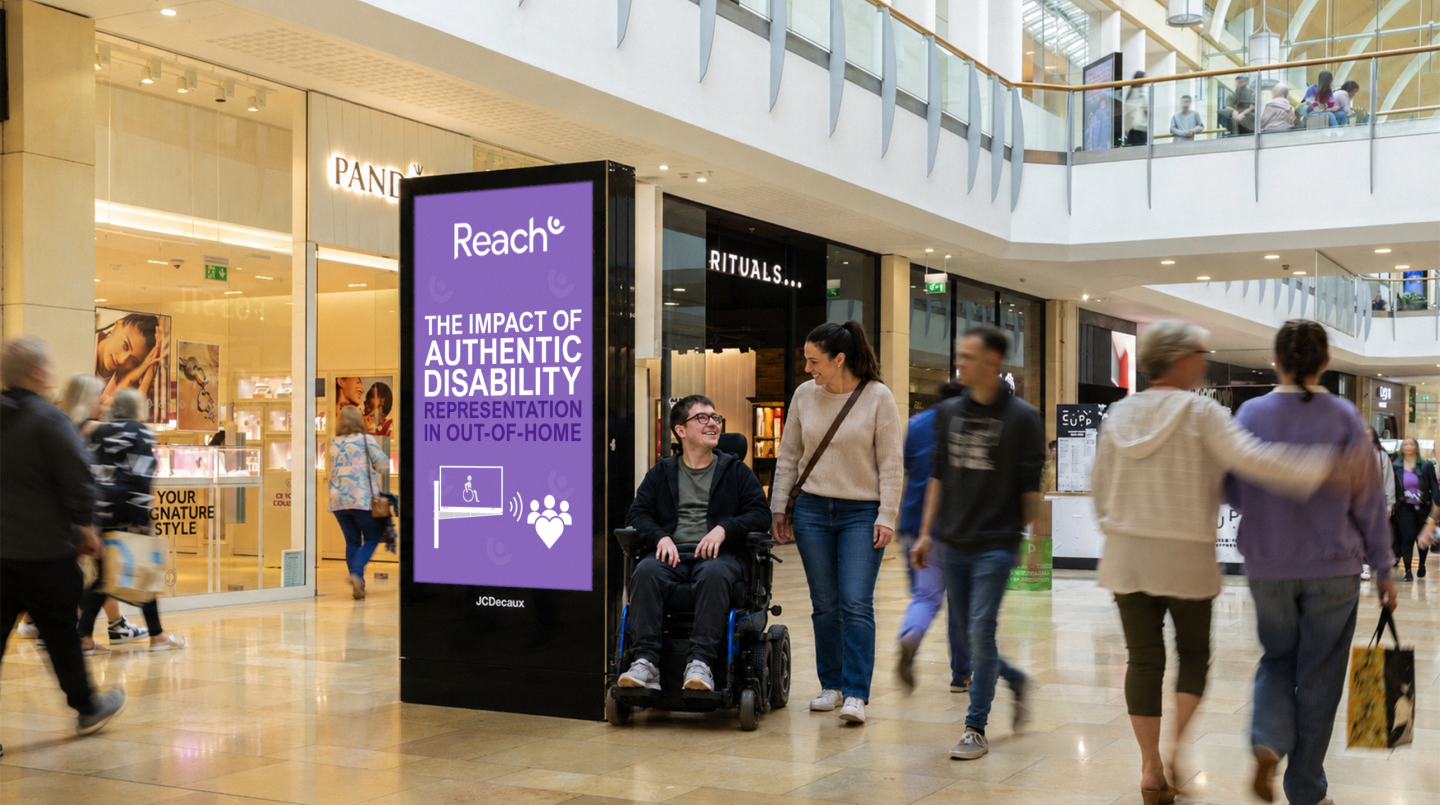
The research helps us better understand disabled audiences and gives brands the insight they need to create campaigns that are both more inclusive and more effective. Representation in the Real World shows that four in five disabled people rarely or never see themselves represented in OOH advertising. And this is despite strong engagement with the channel.
From an OOH ad impact perspective, this is particularly missing the mark, because nine out of 10 disabled people say they would be more likely to consider a brand if it included disabled people in its OOH advertising. And this is a group that’s well reached by this medium. More than four in 10 (43%) people with physical disabilities and neurodiverse individuals (41%) see OOH advertising at least four times per week.
From a commercial standpoint, this is a substantial group of consumers brands shouldn’t ignore. According to the latest estimates from the Family Resources Survey (FRS), run by the Department for Work and Pensions (DWP), 16.8 million people in the UK had a disability in the 2023/24 financial year. This represents 25% of the total population.
The collective spending power of disabled people in the UK – known as the Purple Pound – is estimated at £274 billion annually, with some estimates putting it as high as £446 billion when total household spending is considered.
And there is a halo effect for brands that are more diverse – 74% of non-disabled respondents were also more likely to consider brands that include disabled people in OOH campaigns.
For brands wanting to avoid tokenism and be representative of real lived experience, there are specific steps they can take. Firstly, design for accessibility from the outset – campaigns should be easy to read, navigate and engage with in real-world environments. Secondly, they should reflect diverse disabled experiences, rather than a single stereotype, to show disability as part of everyday life.
Accessibility also means considering factors such as the amount of motion in a creative, how readable the typography is, contrast levels and how a campaign is experienced in different public spaces.
Disabled people responded much more positively to everyday occurrences and humour, and depictions in advertising where they are simply living their lives.
The best way for brands to get that right is to bring disabled people into the process from the start. Listen to their experiences and use that insight to create advertising that is more relevant and effective for everyone.
Start with the audience, not the campaign. Inclusive work should begin by understanding people’s lived experiences, needs and barriers – and by testing ideas before they go live. Disability does not exist in isolation. People have multiple identities, so representation should also reflect the intersectionality and diversity within disabled communities.
Brands that actively address accessibility, prioritise natural pause points, and diversify their representation have a real opportunity to win the hearts and minds of all consumers. OOH advertising exists in shared, everyday real environments and should reflect the communities it reaches. This research shows that true representation isn’t just the right thing to do, it’s proven to boost engagement and growth.